Latin may be called a “dead language,” but its words are very much alive. Across law courts, classrooms, medical schools, and even everyday conversations, Latin phrases continue to shape how we think and speak. The Romans had a remarkable ability to express big ideas in just a few words — and many of their insights still feel surprisingly modern. Below are some famous Latin quotes that continue to resonate today, reminding us that human nature has not changed as much as we might think.
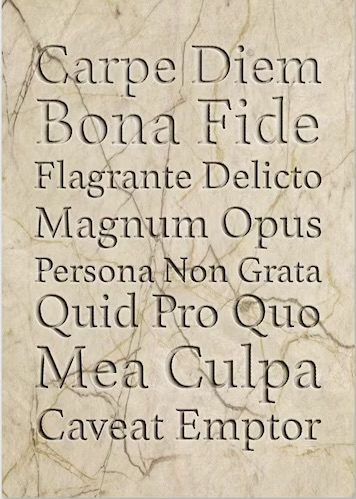
One of the most well-known phrases is carpe diem — “seize the day.” This line comes from the Roman poet Horace, who encouraged his readers to embrace the present rather than worry about the uncertain future (Horace, Odes 1.11). In today’s fast-paced world, where people often delay joy while planning endlessly ahead, carpe diem reminds us to live fully now. Whether it’s pursuing a passion project, spending time with loved ones, or taking intellectual risks, the message is timeless: life is fleeting, so make it meaningful.
Another powerful phrase is memento mori, meaning “remember that you must die.” While it may sound gloomy at first, the Romans used it as a call to humility and perspective. Remembering mortality encourages us to focus on what truly matters — kindness, purpose, and integrity. In an age of constant distraction, memento mori can ground us, reminding us not to take time for granted.
From the political sphere comes senatus populusque Romanus (SPQR), meaning “the Senate and the Roman people.” This phrase symbolized the shared authority of Rome’s government and citizens. Even today, debates about democracy, civic responsibility, and public service echo this idea of collective governance. The phrase reminds us that societies function best when citizens remain engaged and accountable.
The philosopher Seneca offers another enduring insight with non scholae sed vitae discimus — “we learn not for school but for life” (Seneca, Epistulae Morales 106). For students especially, this quote is a powerful reminder that education is not just about grades or exams. Learning shapes how we understand the world, solve problems, and contribute to society. In your own work — whether through Latin studies or broader humanities exploration — this idea highlights the lasting value of intellectual curiosity.
A phrase often quoted in discussions of law and ethics is fiat iustitia ruat caelum — “let justice be done though the heavens fall.” Though its exact origins are debated, it reflects the Roman commitment to legal principles and moral duty. In modern conversations about fairness, human rights, and accountability, this statement continues to inspire the belief that justice must stand above convenience.
Finally, consider amor vincit omnia — “love conquers all,” from the poet Virgil (Eclogues 10.69). This simple yet profound statement speaks to the enduring power of human connection. Across cultures and centuries, love — whether romantic, familial, or communal — remains a force that shapes lives and histories alike.
What makes these phrases remarkable is not just their elegance but their universality. The Romans faced uncertainty, ambition, loss, and hope just as we do today. Their words survive because they capture fundamental truths about being human. When we repeat carpe diem or reflect on memento mori, we participate in a conversation that has lasted over two thousand years.
For students of Classics — and especially for those building projects like blogs or outreach initiatives — these quotes offer a bridge between past and present. They show that studying Latin is not simply about translating ancient texts; it is about discovering ideas that still guide how we live, learn, and lead.
Citations
Horace, Odes 1.11.
Seneca, Epistulae Morales ad Lucilium 106.
Virgil, Eclogues 10.69.
Bibliography
Horace. Odes. Translated by Niall Rudd. Loeb Classical Library.
Seneca. Moral Letters to Lucilius. Translated by Richard M. Gummere. Loeb Classical Library.
Virgil. Eclogues. Translated by H. Rushton Fairclough. Loeb Classical Library.
Beard, Mary. SPQR: A History of Ancient Rome. Liveright, 2015.