In the early days of the Roman Empire, power rarely belonged to women—at least not openly. Rome was a world of senators, generals, and emperors, where politics was dominated by men. Yet behind the scenes, one woman quietly shaped the future of the empire for decades. Her name was Livia Drusilla, and though she never ruled officially, she may have been the most powerful woman in Roman history.
Livia was born in 58 BC into an important Roman family, the gens Claudia. From the beginning, she was surrounded by politics and ambition. Rome at the time was unstable, caught in the chaos of civil wars and rival leaders competing for control. As a young woman, Livia married Tiberius Claudius Nero, a supporter of the republican cause that opposed Julius Caesar’s heir, Octavian.
But history soon changed the course of her life.
In 38 BC, Livia met Octavian, the future emperor Augustus. The story of their meeting is famous in Roman history. Octavian was immediately captivated by her intelligence, dignity, and composure. At the time, Livia was already married and pregnant with her second child. Yet within months, both marriages ended, and Octavian married Livia.
Their union would become one of the most influential partnerships in Roman history.
Unlike many elite Roman marriages, Augustus and Livia remained together for more than fifty years. Ancient writers often described Livia as the perfect Roman wife, matrona Romana. She dressed modestly, managed the imperial household, and presented herself as a symbol of traditional Roman virtue, or mos maiorum, the customs of the ancestors.
But Livia’s influence extended far beyond the household.
Augustus was the first emperor of Rome, though he carefully avoided the title of king. Instead, he presented himself as princeps, meaning “first citizen.” Behind this carefully balanced political image stood Livia, who advised him privately and helped shape the imperial family’s public image. She hosted guests, built alliances, and maintained connections with powerful families across Rome.
Many Romans began to see her not just as the emperor’s wife, but as a political figure in her own right.
Some ancient historians even suggested that Livia quietly guided decisions within the imperial court. The Roman historian Tacitus later hinted that she possessed imperium feminae—a kind of “female power.” Though Roman society officially denied women political authority, Livia demonstrated that influence could exist outside formal titles.
Her greatest political challenge involved the question of succession.
Augustus needed a stable heir to continue the new imperial system that he had built. Over the years, several possible successors died unexpectedly. Eventually, Augustus adopted Tiberius, Livia's son from her previous marriage, as his heir. When Augustus died in AD 14, Tiberius became the next emperor of Rome.
For many Romans, this confirmed Livia’s success. She had helped secure the future of her own family within the imperial dynasty.
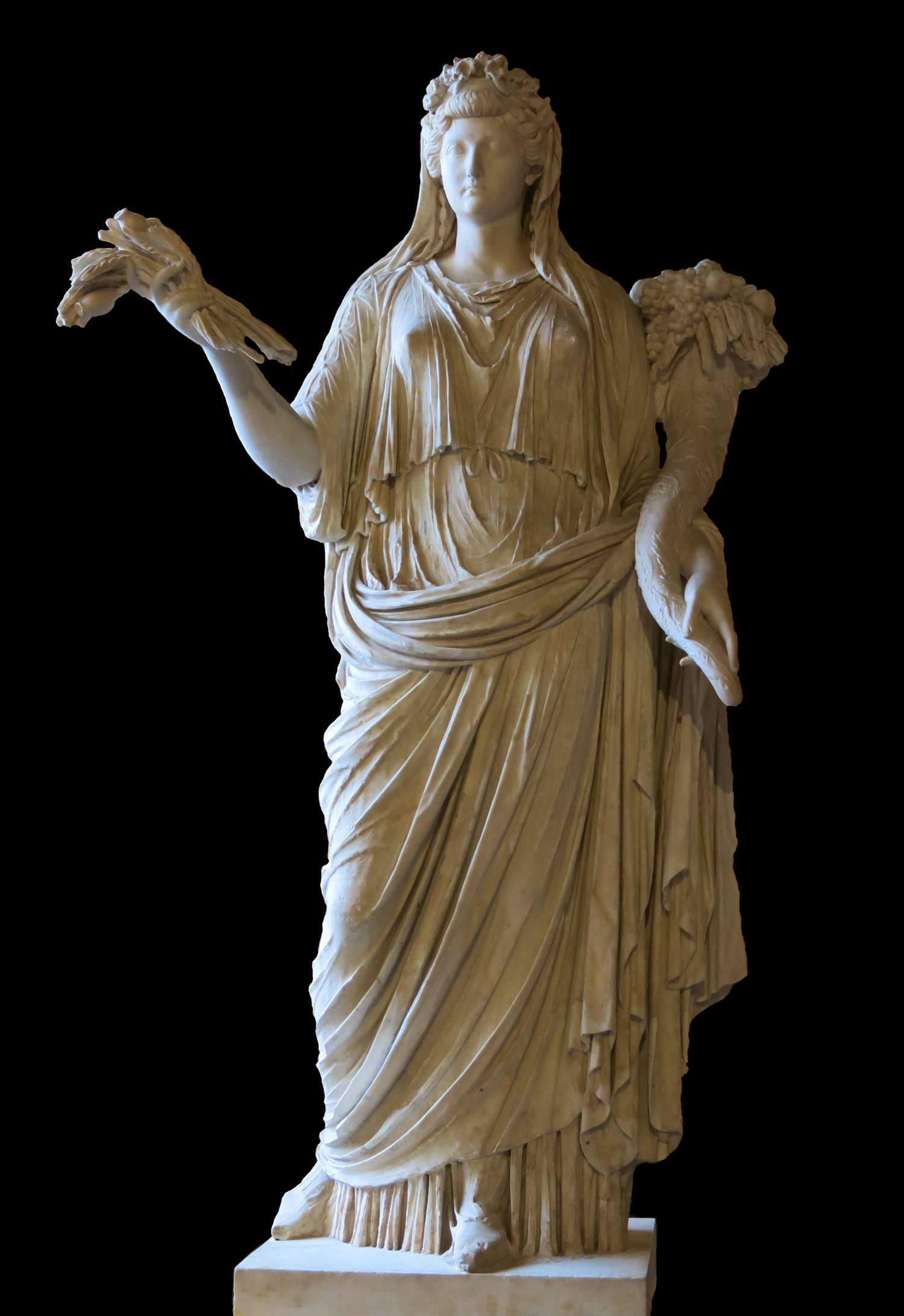
After Augustus’s death, the Senate honored Livia with the title Julia Augusta. She was also granted enormous prestige and respect within Roman society. Statues of her appeared across the empire, portraying her as a symbol of stability, dignity, and maternal authority.
Even after her death in AD 29, Livia’s legacy remained powerful. Nearly forty years later, the emperor Claudius—her grandson—officially deified her, granting her divine honors as diva Augusta.
Today, historians still debate the true extent of Livia’s influence. Ancient writers sometimes portrayed her as a master strategist, while others accused her of manipulating events behind the scenes. The truth likely lies somewhere in between.
What is clear, however, is that Livia Drusilla mastered the art of influence in a society that denied women official power. Through intelligence, patience, and political skill, she helped shape the early Roman Empire from within the imperial household.
In a world ruled by emperors and generals, Livia proved that power does not always require a throne. Sometimes, it works quietly in the background—patient, calculated, and enduring.
Bibliography
Boatwright, Mary T., Daniel J. Gargola, and Richard J. A. Talbert. The Romans: From Village to Empire. Oxford University Press, 2012.
Tacitus. Annals. Translated by Alfred John Church and William Jackson Brodribb.
Barrett, Anthony A. Livia: First Lady of Imperial Rome. Yale University Press, 2002.