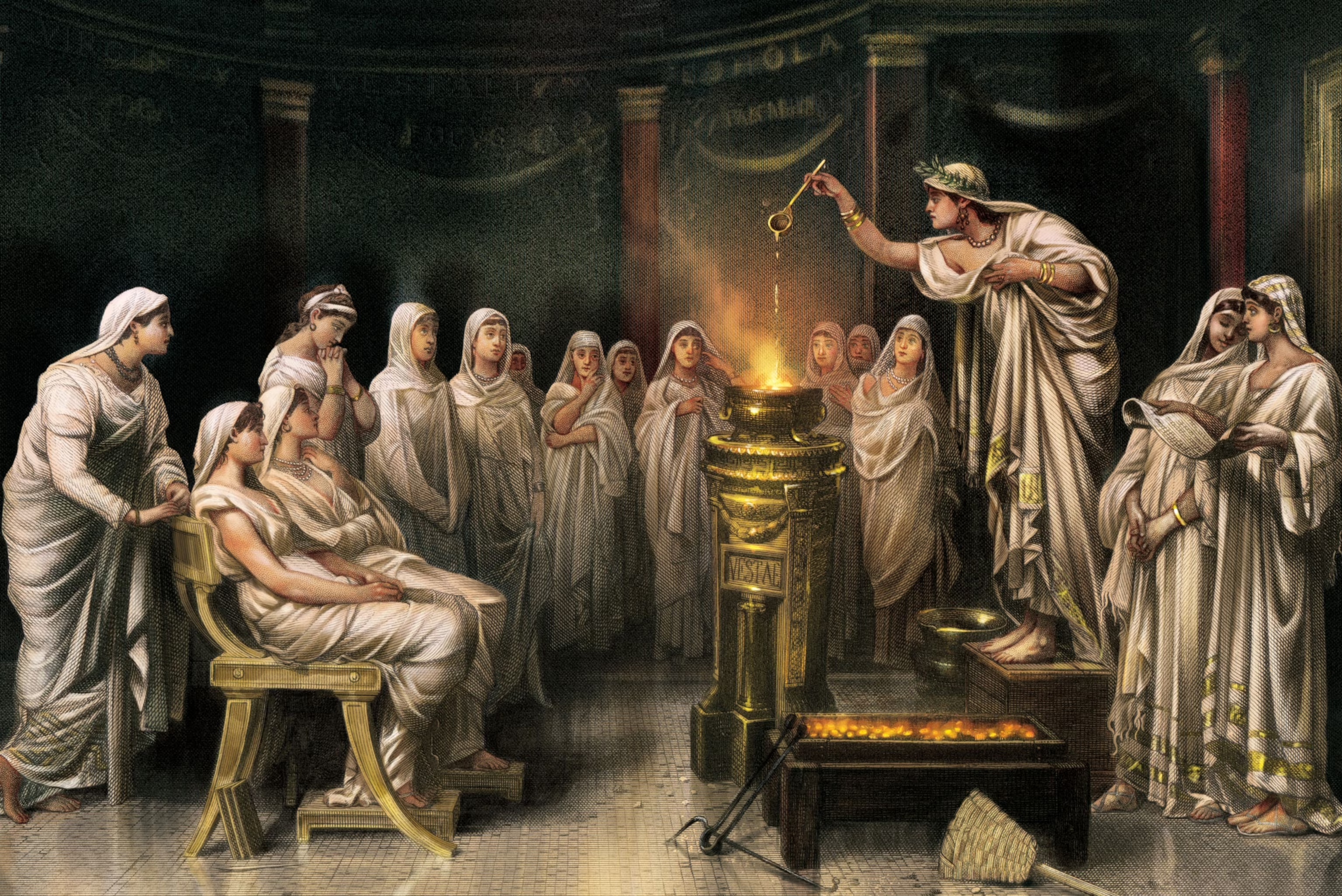
In the heart of ancient Rome, not far from the bustling Forum, stood a quiet and sacred building known as the House of the Vestal Virgins. Here lived six priestesses whose duty was one of the most important in Roman religion: guarding the sacred fire of the goddess Vesta. As long as that fire burned, Romans believed their city would remain protected. If it ever went out, it was seen as a terrible omen. The responsibility was enormous. The Vestal Virgins held rare power and respect—but their position also carried intense pressure and terrifying consequences.
The Vestals were chosen as young girls, usually between the ages of six and ten. They were selected from noble Roman families and officially dedicated to the goddess Vesta. Once chosen, their lives changed forever. They left their families and entered the service of the state for thirty years. Their commitment was expressed through a sacred vow known as votum castitatis, a vow of chastity. During these years, they were expected to remain unmarried and devote themselves entirely to their religious duties.
Their main task was simple in theory but deeply symbolic: they had to keep the sacred flame burning inside the Temple of Vesta. The fire represented the life of Rome itself. Each day, the Vestals carefully tended the flame, adding wood and ensuring it never went out. If it did, Romans believed the gods were warning them of danger. The priestess responsible could be punished severely. The ritual importance of the flame was summed up by the phrase ignis aeternus, meaning “the eternal fire.”
Despite these heavy responsibilities, the Vestal Virgins enjoyed privileges that few women in ancient Rome had. Roman society was deeply patriarchal, and most women had limited independence. The Vestals, however, were exceptions. They could own property, manage their finances, and even make a will—rights normally denied to women. They traveled through the city with special attendants called lictores, a symbol of high status usually reserved for powerful magistrates.
Their presence also carried legal authority. If a Vestal Virgin happened to pass a condemned prisoner on the way to execution, she could grant him mercy simply by speaking. Her sacred status made her words powerful. Romans believed the Vestals lived under the direct protection of the gods.
But this privilege came with intense pressure. The Vestals were expected to embody purity and discipline. Breaking their vow of chastity was considered not just a personal failure but a religious disaster that could anger the gods and threaten the entire state.
The punishment for such a crime was chilling. Roman law forbade the execution of Vestal Virgins because their bodies were considered sacred. Instead, the punishment was burial alive. The condemned priestess was led outside the city walls to an underground chamber. There, she was given a small amount of food and water, and the entrance was sealed. Romans claimed that by leaving her with minimal supplies, they were not technically killing her—but the outcome was inevitable.
This horrifying ritual reflected the seriousness with which Romans viewed religious duty. A Vestal who broke her vow had violated the sacred trust between the city and the gods. The punishment was meant to restore balance and demonstrate Rome’s devotion to divine law, known as pax deorum, or “peace with the gods.”
Yet the story of the Vestal Virgins is not only about punishment. It is also about the strange mixture of power and restriction that defined women’s lives in ancient Rome. These priestesses stood at the center of Roman religion. They held privileges other women could only imagine. But they also lived under constant scrutiny, knowing that one mistake could destroy everything.
The Vestals remind us that even positions of great honor can come with heavy expectations. In Rome, their lives were symbols of the city’s stability and purity. Their sacred flame burned for centuries, representing Rome itself—powerful, disciplined, and always watched by the gods.
Bibliography
Beard, Mary, John North, and Simon Price. Religions of Rome: Volume 1, A History. Cambridge University Press, 1998.
Lintott, Andrew. The Constitution of the Roman Republic. Oxford University Press, 1999.
Takács, Sarolta A. Vestal Virgins, Sibyls, and Matrons: Women in Roman Religion. University of Texas Press, 2008.