Assassination was not unusual in ancient Rome. Beneath the shining marble temples and grand speeches of the imperium Romanum, power was fragile. Emperors and senators alike feared betrayal. Many rulers died not in battle, but by quiet, calculated murder—often by poison. Among the shadowy figures who moved within this dangerous world was Locusta, a professional poisoner active during the Julio-Claudian dynasty. Some modern writers call her the world’s first serial killer. But was she truly a monster—or simply a tool in Rome’s ruthless political machine?
Locusta was originally from Gaul. She came to Rome during the first century CE, a time when political ambition and paranoia shaped daily life at the top of society. Poison became a common method of assassination because it was discreet and difficult to trace. In fact, wealthy Romans often forced enslaved people to taste their food first. If the taster died, the master was spared. Such was the brutal reality of Roman hierarchy.
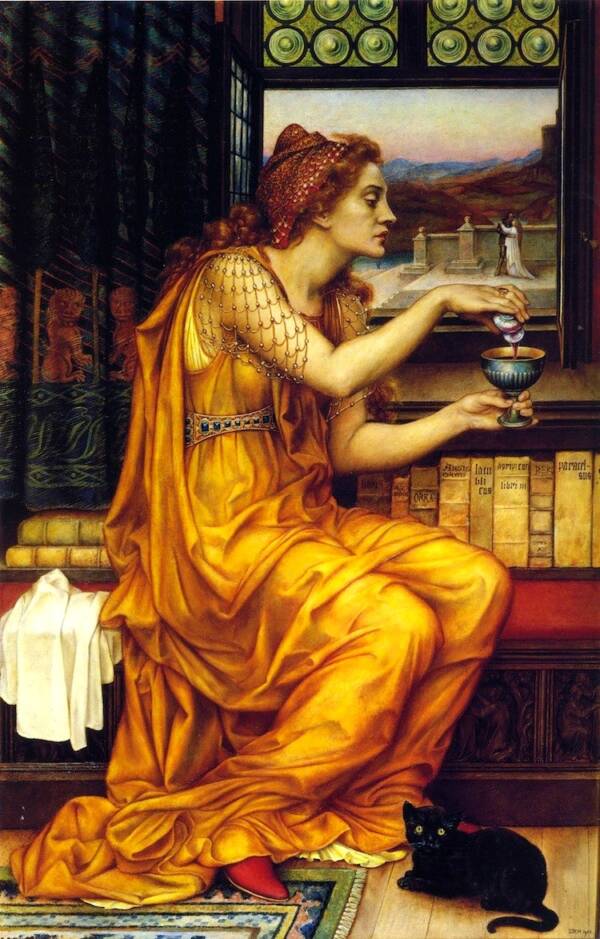
Locusta’s name first appears in connection with Agrippina the Younger, mother of Nero. According to the Roman historian Tacitus, Agrippina wanted her son to become emperor. In 54 CE, she allegedly arranged for her husband, Emperor Claudius, to be poisoned (Tacitus, Annals 12.66–67). The story claims that Claudius was served poisonous mushrooms—boleti, considered a delicacy. When he tried to induce vomiting with a feather, the feather itself had been treated with poison. Ancient writers suggest that Locusta may have prepared the toxin.
It is important to remember that our sources—especially Tacitus and Suetonius—often wrote with drama and moral judgment. They loved scandal. While Claudius’ death was widely believed to be poisoning, the exact role of Locusta remains uncertain. Still, her reputation grew.
Nero, once emperor, later turned to Locusta again. He feared his stepbrother Britannicus, the biological son of Claudius, who had a stronger claim to the throne. In 55 CE, during a public banquet, Britannicus suddenly collapsed after drinking wine. Ancient sources report that the hot wine was cooled with poisoned water (aqua frigida) (Tacitus, Annals 13.15–17). This time, the poison worked. Nero rewarded Locusta generously, even granting her property and protection (Suetonius, Nero 33).
Yet Rome’s political tides shifted quickly. When Nero died in 68 CE, chaos followed. The year 69 CE became known as the “Year of the Four Emperors.” Nero’s successor, Galba, ordered the execution of many of Nero’s allies. Locusta was arrested and put to death. Later writers claimed she suffered a cruel execution, but details are unclear.
Locusta’s legacy is complex. She was certainly involved in political killings, but she did not act alone. She worked at the command of emperors and empresses within a corrupt system driven by ambition. Calling her a “serial killer” may oversimplify her role. She was not murdering randomly; she was serving the powerful.
Her story also reveals something striking: in a male-dominated society, a woman found influence through knowledge—dangerous knowledge. Whether villain or opportunist, Locusta remains a fascinating figure. Her life reminds us that in Rome, power was fleeting, reputation fragile, and survival often depended on who controlled the poison.
Bibliography
Tacitus. Annals. Translated by Alfred John Church and William Jackson Brodribb.
Suetonius. The Twelve Caesars. Translated by Robert Graves.
Barrett, Anthony A. Agrippina: Sex, Power, and Politics in the Early Empire. Yale University Press, 1996.