The Roman Republic lasted from 509 BC, after the fall of the monarchy, to 27 BC, when the Roman Empire began (Livy, Ab Urbe Condita; Flower 2010). In Latin, the Romans called their government rēs pūblica, meaning “public affair” (Cicero, De Re Publica). The idea sounds democratic—government for the people. But was it really?
The Republic was powerful, ambitious, and almost always at war. Rome fought three major conflicts known as the Punic Wars against Carthage (Polybius, Histories). After defeating its greatest rival, Rome became the dominant power in the Mediterranean (Polybius). Yet while Rome conquered lands abroad, it struggled deeply at home.
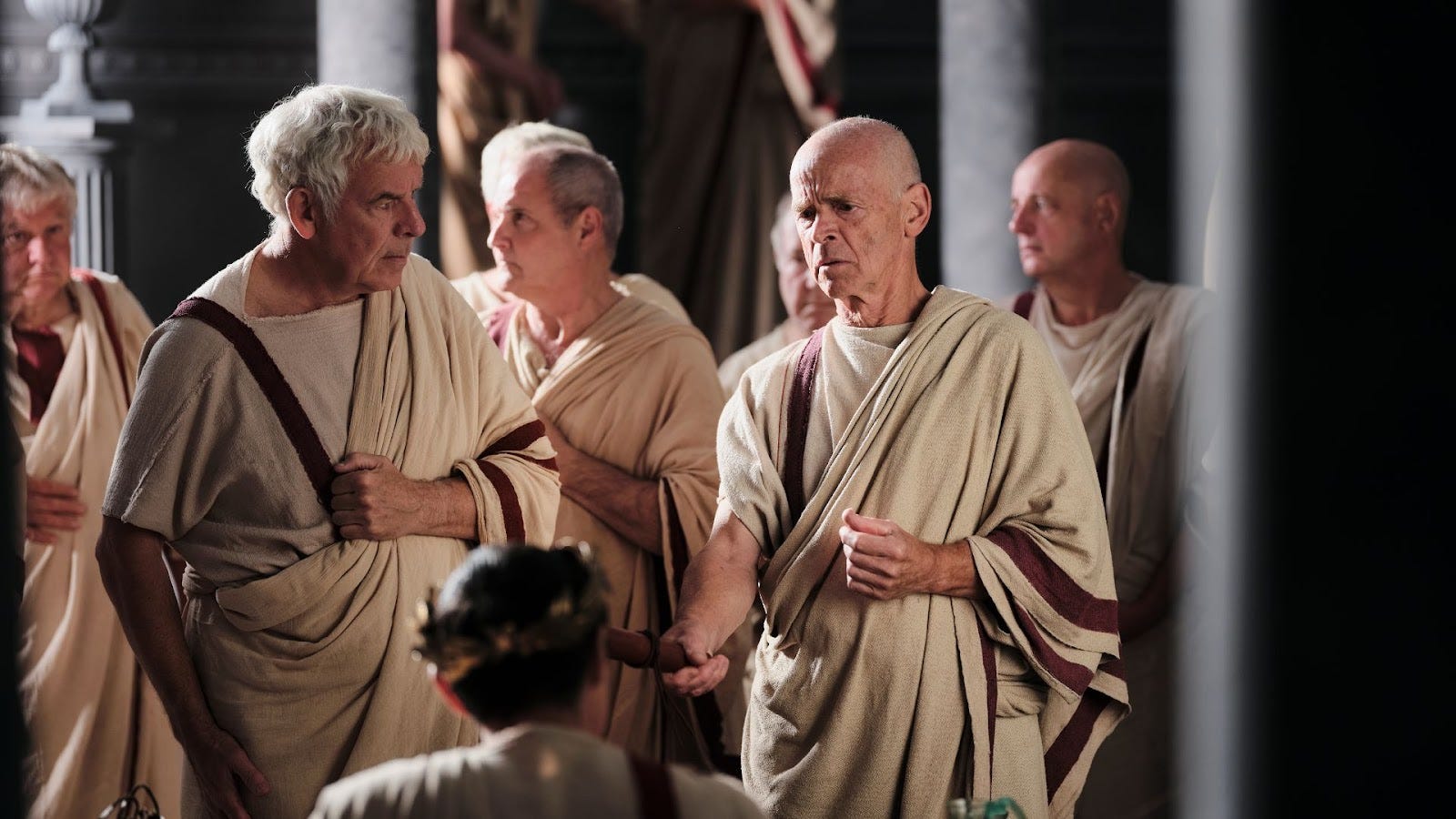
One of the earliest and most important conflicts was the Conflict of the Orders. This was a political struggle between the patricii (aristocratic families) and the plebēs (common people) (Livy). The patricians believed they were descendants of Rome’s founders and held most of the political power. The plebeians were farmers, laborers, and soldiers—the people who kept Rome running—but they had little voice in government (Lintott 1999).
The plebs grew tired of harsh taxes, debt, and unfair treatment. In 495 BC, they staged a dramatic protest called the secessio plebis, or “secession of the plebs” (Livy). They left the city and refused to work or fight until their demands were heard. It worked. As a result, the office of the tribune of the plebs was created (Livy; Lintott 1999).
The tribunes were powerful. They could veto the actions of consuls and block decisions made by the Senate if those decisions harmed the plebs. This power, called intercessio, made them an important check on elite authority (Lintott 1999). For a time, Rome seemed closer to true republicanism. Elections were held annually, and more citizens had a voice (Millar 1998).
But even at its best, the Republic was not fully equal. A small group of wealthy families—like the Manlii and Fabii—dominated politics (Flower 2010). The system functioned more like an elective oligarchy than a democracy. Yes, citizens voted. But in reality, power often stayed within the same elite circles (Millar 1998).
As the Republic expanded, internal divisions grew worse. Political leaders split into two loose groups: the optimatēs, who supported traditional senatorial power, and the populārēs, who claimed to defend the people (Gruen 1974). Their rivalry led to increasing violence and instability.
One key turning point came with the dictator Lucius Cornelius Sulla. Seeing the tribunate as a threat, he stripped the tribunes of much of their authority, including their ability to propose laws (Appian, Civil Wars; Plutarch, Life of Sulla). The office began to lose its strength and dignity. Some tribunes were even manipulated or “bought” by powerful elites (Gruen 1974).
Later, in 48 BC, the Senate granted tribūnīcia potestās—tribunician power—to Julius Caesar, even though he was a patrician (Suetonius, Divus Julius). When elected tribunes protested, Caesar removed them from office (Suetonius; Appian). Fear replaced opposition. Though Caesar claimed to protect the Republic, his actions weakened its foundations. His rise to dictatorship triggered events that led to the Republic’s final collapse (Plutarch, Life of Caesar).
So was the Roman Republic truly a republic?
At times, especially when the tribunes were strong, it moved toward broader representation. But throughout its history, it leaned heavily toward oligarchy (Millar 1998). In the beginning and at the end, patrician families held overwhelming control. Even in the middle period, when reforms were strongest, the system often favored wealth and influence over equality (Flower 2010).
The Republic shifted from a pure patrician oligarchy to what might be called a shared patrician-plebeian oligarchy. Some tribunes genuinely defended the people. Others sought personal advancement. Corruption slowly eroded the system (Gruen 1974).
Rome’s story teaches an important lesson. A republic depends on balance and accountability. When power concentrates in too few hands, even a government called rēs pūblica can drift away from serving the public (Cicero).
The Roman Republic was not entirely democratic, nor was it completely tyrannical. It was fragile and constantly changing. Its successes and failures remind us that political systems require vigilance. Without it, even a “public affair” can become the affair of only a powerful few.
Bibliography
Appian. Roman History: The Civil Wars. Translated by Horace White. Loeb Classical Library.
Cicero. De Re Publica. Translated by Clinton Keyes. Loeb Classical Library.
Flower, Harriet I. Roman Republics. Princeton University Press, 2010.
Gruen, Erich S. The Last Generation of the Roman Republic. University of California Press, 1974.
Lintott, Andrew. The Constitution of the Roman Republic. Oxford University Press, 1999.
Livy. Ab Urbe Condita. Translated by B. O. Foster et al. Loeb Classical Library.
Millar, Fergus. The Crowd in Rome in the Late Republic. University of Michigan Press, 1998.
Plutarch. Parallel Lives (Lives of Sulla and Caesar). Translated by Bernadotte Perrin. Loeb Classical Library.
Polybius. The Histories. Translated by W. R. Paton. Loeb Classical Library.
Suetonius. The Twelve Caesars. Translated by J. C. Rolfe. Loeb Classical Library.